



A dark shed is awkward and unsafe. With good LED shed lighting you can see what you are doing, find your things again and actually get jobs done there. But how much light do you need, which fitting is dust- and moisture-proof and how do you sort out the power? Here you can read how to light a shed or workshop.
In short
- Light: count on about 300 lux for the space and 500 lux above your workbench.
- Light colour: 4000K to 5000K gives bright, neutral working light.
- Protection: for dust and moisture choose at least IP44, preferably IP65.
- Handy: a motion sensor keeps the light on when your hands are full.
Jump straight to:
How much light do you need?
Worked example
A shed of 5 by 4 metres is 20 m². For 300 lux you need roughly 20 x 300 = 6000 lumens. With two LED fittings of 3000 lumens each you are well covered, and for the workbench you add an extra light. How the calculation works you can read in What is a lumen?.
Workbench and shadow
Don’t hang the light behind you but above and slightly in front of your workbench, so you don’t cast a shadow on your work. A spot where you work with sharp tools can happily have 500 lux or more. More about lux per workplace is in LED lighting for workshops.
Which LED lights for a shed?
LED tube fittings
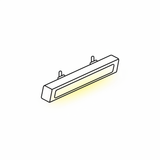
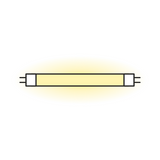
The classic for sheds and workshops: plenty of light, evenly spread and cheap to run. Do you still have fluorescent tube fittings? Then you can replace the tubes, see Replacing fluorescent tubes with LED. You can find all tubes under LED tubes.
Panels and floodlights
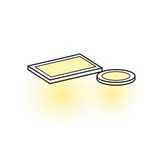
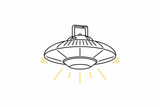
A shed with clean walls and ceiling suits an LED panel. For a corner or a specific workplace you choose an LED floodlight. In high spaces a high bay works better.
Dust, moisture and cold
In a shed you get dust, spiders and sometimes condensation. Choose at least IP44, and IP65 if you work with water or a lot of dust. LED isn’t bothered by cold, whereas energy-saving lamps warm up slowly in winter. See IP rating explained and the LED lighting for garage and shed.
Power, sensor and switch
Motion sensor
With a motion sensor the light comes on when you walk in, even when your hands are full. How to set it up you can read in LED lamp with sensor.
No power in the shed
No connection? Then you can opt for rechargeable lights or a solar panel set. See Solar LED lighting. Always have fixed wiring done by an electrician.
📩 More LED tips in your inbox?
Sign up and you will immediately get a 5% welcome discount in your inbox. After that I will send you a new LED tip now and then. You can unsubscribe at any time.
Frequently asked questions
How many lumens do I need in a shed?
Which light colour is best for a workplace?
Which IP rating do I need in a shed?
Can I use LED tubes in a cold shed?
What if there is no power in my shed?
Kind regards,
Bas / LEDPLANET.NL